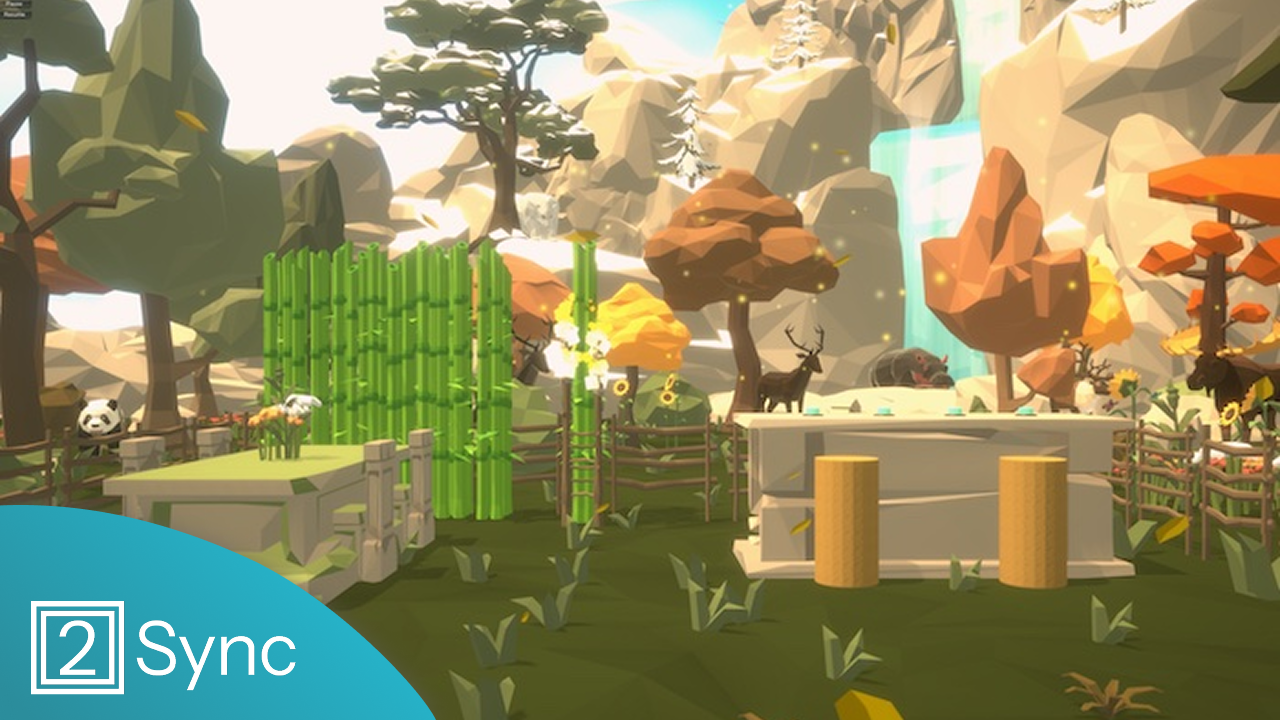
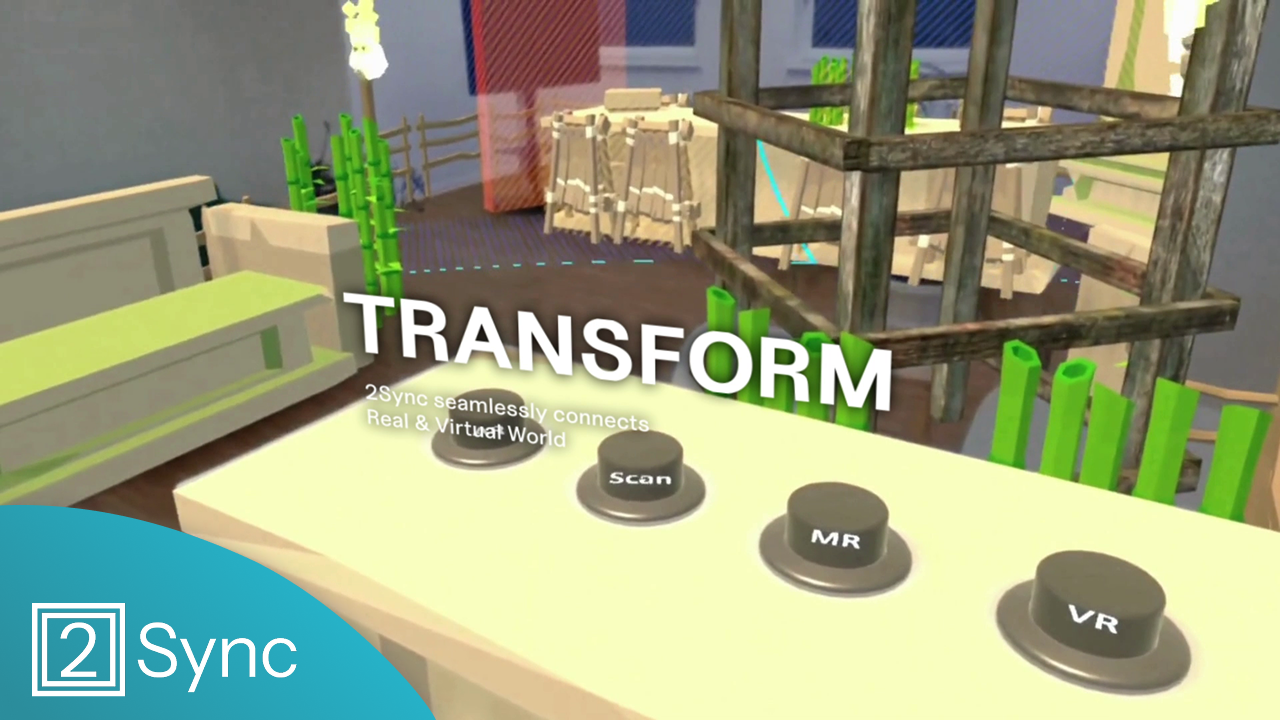
Siemens ExperienceXR was our first business project with Siemens and an important early showcase for 2Sync. The goal was to create a flexible Mixed Reality application that could be used in a dedicated showroom, at events, and by mobile teams. The application was designed to demonstrate the strengths of auto-adaptive Mixed Reality as a training and innovation showcase. The core experience was built around a simple interaction: four virtual buttons placed on a physical table. Users pressed the buttons directly on the real table, feeling the physical surface through passive haptics while interacting with the virtual interface. Each button triggered the next step in the experience and moved the users gradually from AR to room scanning, then to MR, and finally to a fully virtual environment.
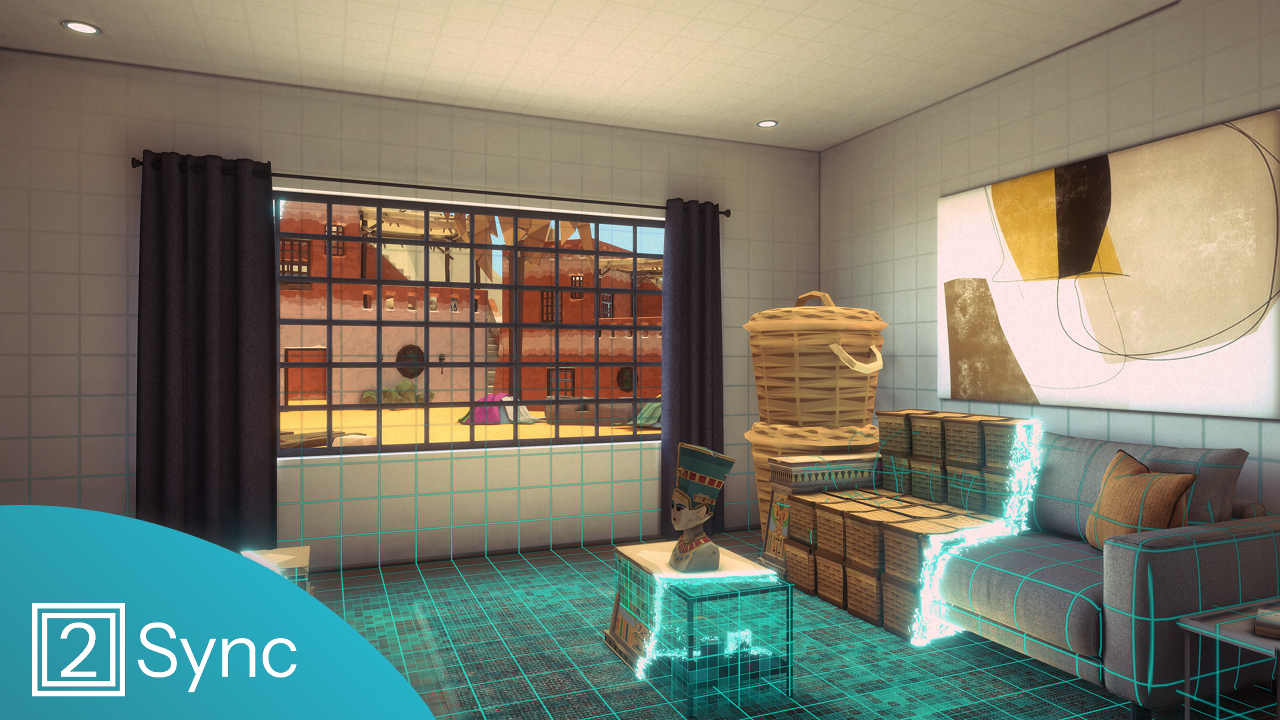
The experience was designed for multiple users in the same physical room. Participants could explore the transition together, see synchronized virtual avatars, and trigger shared interactions in the same spatial environment. This made the application not only a training tool, but also a collaborative showcase. This step-by-step structure made the differences between AR, MR, and VR easy to understand. Instead of explaining these concepts theoretically, the application made them visible and interactive inside the real room. Using the 2Sync SDK, the application adapted to the physical environment. Virtual layers could appear on top of the real space, individual objects could be transformed, and the room could eventually receive a complete virtual skin. Handtracking made the interaction accessible without controllers. Additional playful interactions helped gamify the showcase and made the learning process more engaging.
The application is still in use today and continues to serve as a flexible showcase for spatial computing, training, and auto-adaptive Mixed Reality. For 2Sync, Siemens ExperienceXR was an important proof point: auto-adaptive Mixed Reality can support scalable business use cases beyond entertainment – from training and onboarding to innovation communication.