ExcursionXR: Bringing adaptive XR into the classroom
How can classrooms become interactive learning environments?
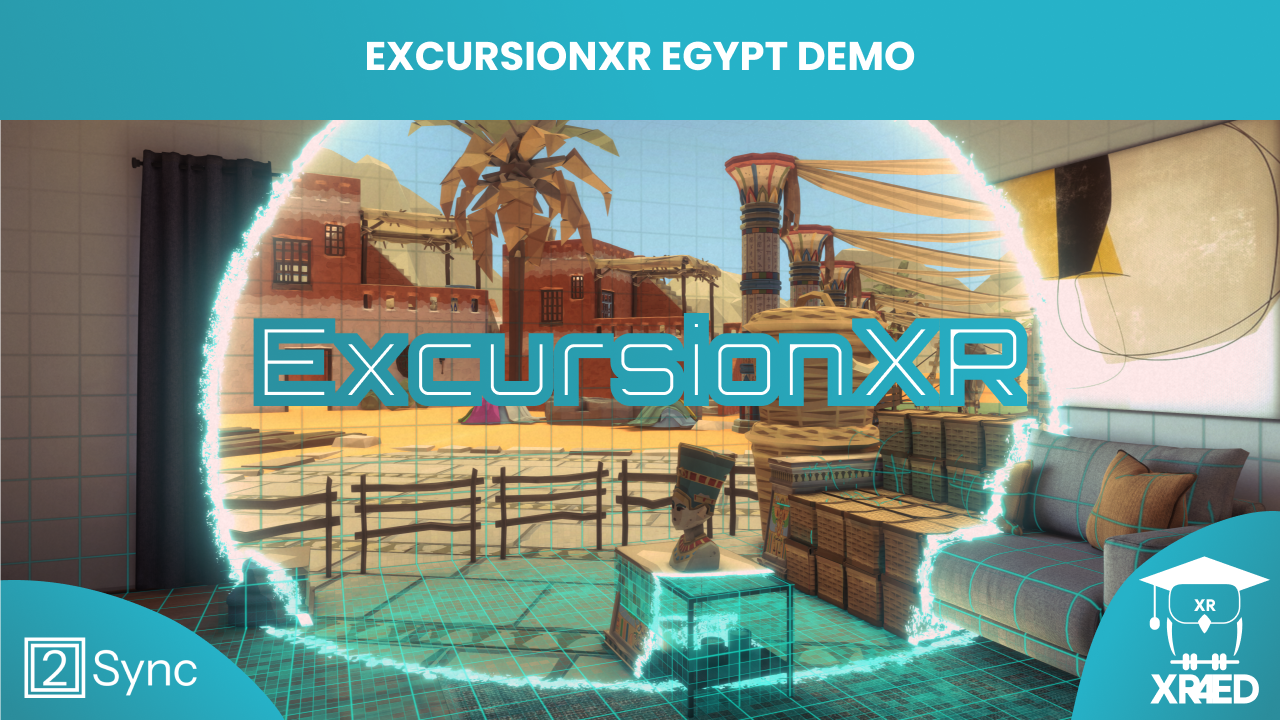
This was one of the core questions behind ExcursionXR, an EU-funded project exploring how XR can support education in schools. The idea was to give teachers a way to create and use immersive learning experiences directly inside the classroom. Instead of moving students into a fixed virtual environment, ExcursionXR used the physical classroom as part of the experience.
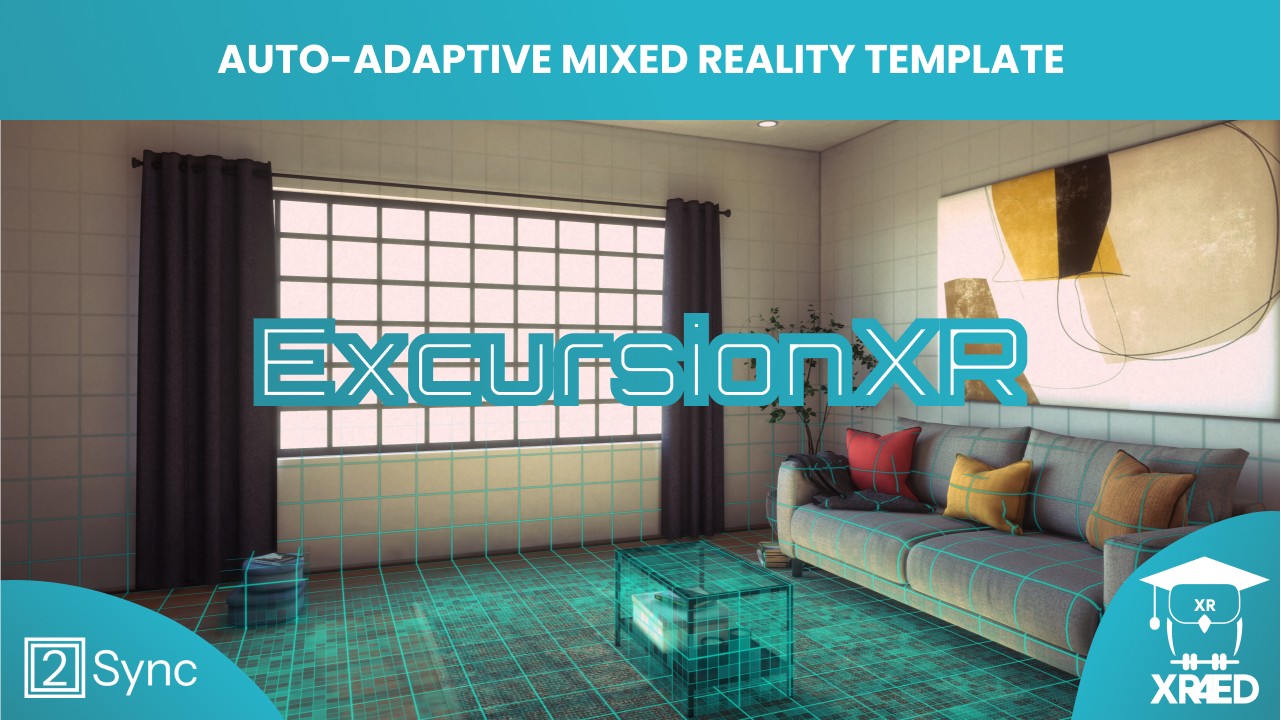
2Sync contributed its auto-adaptive Mixed Reality technology to the project. By using spatial computing, XR content could adapt to the real room layout and make walls, open spaces, and physical structures part of the learning experience.
This approach is especially relevant for education. Schools do not have standardized rooms or dedicated XR spaces. Every classroom is different. For XR to work at scale, learning experiences need to adapt to these spaces without complex setup or manual reconstruction.
With ExcursionXR, we explored how room-independent XR can make immersive education more practical. Teachers could build learning environments, while the underlying technology handled the adaptation to the physical space.
For us, the project was an important step in applying auto-adaptive Mixed Reality beyond entertainment. It showed how spatial computing and procedural generation can support scalable XR use cases in education – from interactive physics lessons to virtual museum experiences inside the classroom.
ExcursionXR demonstrated a simple but powerful idea: the classroom itself can become the learning environment.